Interactive music game study reveals best tips for creation
"Music is not just about listening; it is about the tactile joy of layering sounds to build something entirely new."
The study of interactive music game mechanics reveals how user-driven content flourishes through intuitive interfaces and modular sound design. By analyzing the structure of games like Incredibox, we can understand how simple drag-and-drop mechanics transform passive listeners into active creators.
Key takeaways: * Modular sound design allows for seamless layering without technical friction. * Intuitive interfaces lower the barrier to entry for non-musicians. * User-generated content thrives when the game provides a structured yet flexible framework.
How does interactive music game design foster creativity?
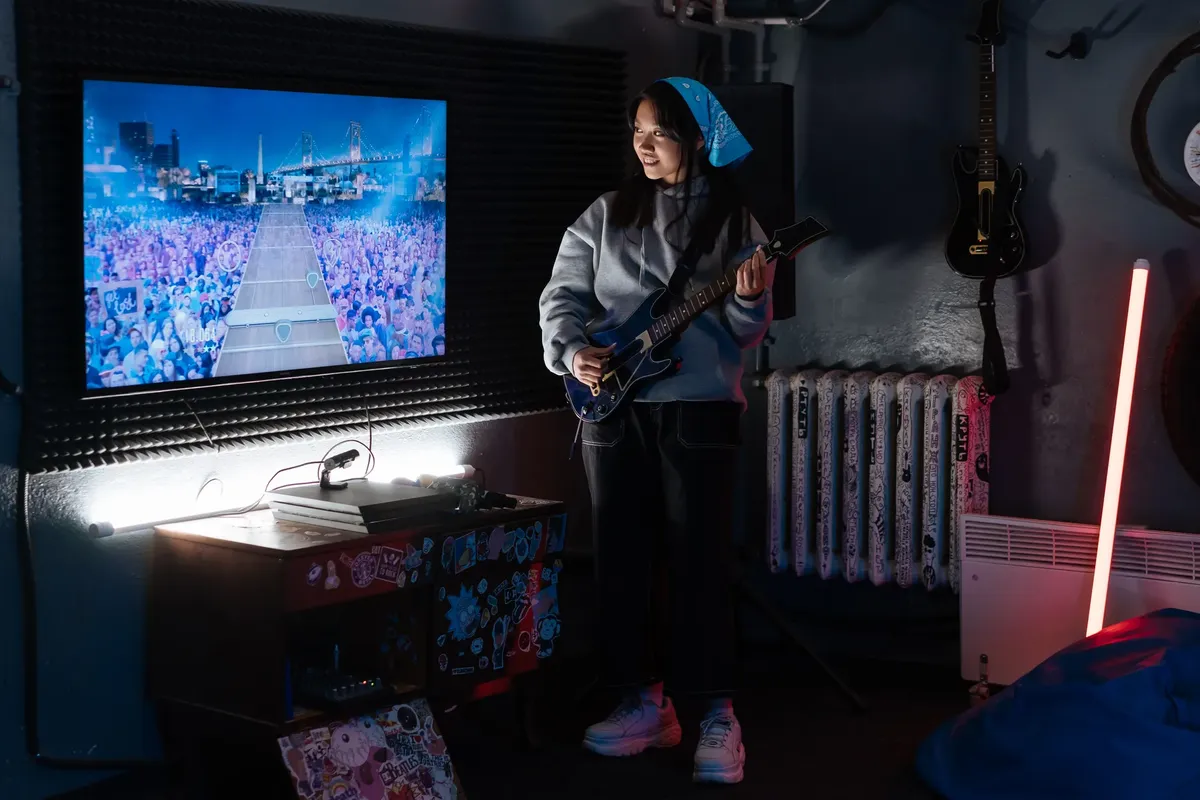
At midnight in the dimly lit studio, she drags a neon icon across the screen, feeling the sudden vibration of an interactive beat that pulses through her fingertips.
When a user drags a colorful icon onto a character, a beat immediately syncs with the existing loop. This seamless transition between an action and a sonic result is the core of an interactive music game study.
The mechanical loop ensures that every user input results in a harmonious addition rather than a chaotic noise.
In these environments, the interface acts as a conductor's baton. Instead of traditional notation, users interact with visual representations of rhythm, melody, and bass. This approach turns the complex task of composition into a playful exploration of texture and timing.
The design must balance freedom with constraints to prevent overwhelming the player. By providing a set of compatible loops, the game guides the user toward musicality while still allowing for unique combinations.
This balance is essential for maintaining engagement during a generative music gameplay session.
However, the creative freedom may be limited when players strictly follow preset loops.
What makes user-generated game music successful?

At midnight, a musician taps the glowing screen to layer a vocal track, feeling the pulse of an interactive groove settle into their palms. A musician sits at a desk, tapping a screen to layer a vocal track over a heavy drum beat. They adjust the timing, feeling the rhythm settle into a cohesive groove. Analyzing user-generated music shows that successful content relies on the ability to experiment without fear of failure.
The primary driver of engagement is the immediate feedback loop. When a user adds a beatbox element, the immediate auditory response validates their creative choice. This instant gratification encourages further experimentation, leading to more complex arrangements.
Effective beatbox interactive design focuses on rhythmic cohesion. Because the loops are pre-quantized, users can focus on the emotional and stylistic qualities of the sounds. This allows players to act as producers, managing the energy and flow of a track through simple gestures.
The quality of the output depends on how well the user can manipulate the provided elements.
Can simple interfaces handle complex beatbox design? A hand reaches for a tablet, selecting a percussion loop to add a sharp snap to the track. The user does not need to know music theory to create a catchy hook. This ease of use is a hallmark of successful music game user participation.
The interface serves as a bridge between human intent and digital execution. By mapping complex musical roles to simple visual icons, the game allows users to explore different musical roles, such as percussionist or vocalist, effortlessly.
This democratization of music production is a key feature of modern interactive tools.

The design must ensure that the visual language is as clear as the audio. If a user understands that a specific icon represents a bassline, they can intuitively build a foundation for their track. This clarity is vital for maintaining the momentum of the creative process.
This approach is not applicable when users require granular control over individual sound frequencies.
What are the core components of Incredibox content creation?
A finger slides a hat onto a character, instantly triggering a rhythmic vocal loop. The user smiles as the new layer fills the empty space in the arrangement. This process of building layers is central to Incredibbox content creation.
To understand the mechanics, we can look at three fundamental pillars: 1. Layered loop structures that maintain a consistent tempo. 2. Visual character customization that reflects specific sound roles. 3. Modular sound elements that can be swapped or combined instantly.
I observed how these layers interact when I attempted to build a track from scratch, finding that the preset harmony made every combination sound intentional. A final check of the mix ensures that no single element overpowers the others, maintaining a balanced auditory experience.
The process follows these steps: 1. Select a character. 2. Drag an icon to the character. 3. Layer sounds to build the track.
How do these mechanics impact the educational potential of music games?
A student in a classroom taps a screen, experimenting with how a melody interacts with a drum beat. The teacher watches as the student learns about rhythm through play.

This intersection of play and learning was recognized when Incredibox was awarded by AASL (American Association of School Librarians) as one of the "Best Apps for Teaching & Learning" during the ALA annual conference in New Orleans in June 2018.
The educational value lies in the hands-on exploration of musicality. Users learn about structure, layering, and the relationship between different musical parts through direct interaction. This kinesthetic learning approach makes abstract concepts like syncopation or harmony tangible.
While these tools are powerful for engagement, they are primarily focused on loop-based composition rather than free-form melodic improvisation.
In this sequence, the third step is the most significant for learning.
Related
- How does a killer game hardware impact consumer spending?
- Galaxy Store formation history: Tips for device optimization
When does the tactile joy of Music become overwhelming? When the game fails to balance freedom with constraints, the tactile joy of Music can become overwhelming. The design must ensure that the visual language is as clear as the audio, preventing the player from becoming lost in too many options. If the framework is too loose, the user may struggle to find a cohesive groove, diminishing the satisfaction derived from the layering process.
This caution applies when the modular sound elements are introduced without sufficient guiding principles. The game needs to offer a structured yet flexible framework so that the user's creative impulse remains channeled toward musicality.
Without this guidance, the simple drag-and-drop mechanics might devolve into random sound generation rather than intentional creation.
The comparison between intuitive interfaces and overly complex systems shows that the latter stifles the very creativity the game intends to foster. The goal remains transforming passive listeners into active creators through manageable interaction.
The complexity can become overwhelming if too many layers are added at once.
Wikipedia: Incredibox (full) Based on the retained excerpt mentioning American Association of School Librarians: In June 2018 Incredibox was awarded by AASL (American Association of School Librarians) as one of the "Best Apps for Teaching & Learning" during the ALA annual conference in New Orleans.







Comments 0