Why apps fail: Guide to efficiency WebOS history Palm to LG
The later part of this article returns to WebOS history Palm to LG.
This guide explores how to select a tool that actually changes your habits rather than just adding another icon to your home screen.
* Focus on friction-less entry for tasks. * Prioritize cross-device synchronization. * Avoid apps that require excessive manual setup. * Evaluate the interface for cognitive load.
Why do productivity apps fail after a week?
In the morning I hold apps and walk through the next step.
The bright colors and gamified badges promised efficiency, but they only served to distract me from the actual work at hand.
According to the Fair Trade Commission (South Korea), Google was fined $177 million in 2021 for restricting manufacturers from using modified versions of Android.
Most users abandon new productivity tools because the initial setup requires more mental energy than the tasks themselves. When an app demands constant categorization, tagging, and manual input, it becomes a job rather than a tool.
A successful app should allow you to capture a thought in seconds and get back to your real-world responsibilities immediately.
The friction of moving from a thought to a digital entry is the primary killer of habit formation. If you have to click through three menus to add a single reminder, you will eventually stop using the app. True productivity comes from reducing the gap between intention and action.
What makes an app truly efficient? WebOS history Palm to LG
In the evening I hold apps and walk through the next step.
I watched a colleague struggle through a morning of "organizing" her schedule, only to realize she hadn't actually completed a single meaningful task. She was busy, but she wasn't productive.
Efficiency in an app is defined by its ability to stay out of the way while providing necessary structure. A great tool offers a balance between structured templates and a blank canvas for spontaneous ideas.
It must handle the heavy lifting of organization—like reminders, deadlines, and priority sorting—without requiring the user to manage the software itself.
The core of efficiency lies in three specific areas: 1. Rapid capture capabilities for incoming information. 2.* Seamless integration with existing calendars and communication tools. 3. Natural language processing that converts "Meeting at 5 PM" into an automated entry.
When these elements work together, the tool becomes an extension of your thought process. If you can glance at your screen and instantly know your next move, the app is doing its job.
According to Fair Trade Commission, the recorded figure is 177 million.
How to select the right tool for your workflow?
A heavy rainstorm hit the city yesterday, and as I sat listening to the rhythm on my window, I realized how much I rely on my digital environment to keep my mind calm. I realized that choosing an app is not about finding the most features, but about finding the right fit for your specific brain.
To find your match, you must first identify your primary workflow type. Some people need a "second brain" for deep knowledge management, while others simply need a highly visual checklist to manage daily chores.
Selecting an app based on popularity rather than personal need is a common mistake that leads to wasted time.
Follow these steps to evaluate a new tool: 1. Test the "quick capture" speed by trying to add an idea while walking or multitasking. 2. Check the synchronization reliability across your phone, tablet, and desktop. 3. Verify that the search function can find specific notes or tasks instantly.
After testing, check if the app's layout feels intuitive. If you have to look at a tutorial to find the "add" button, it is too complex for daily use.
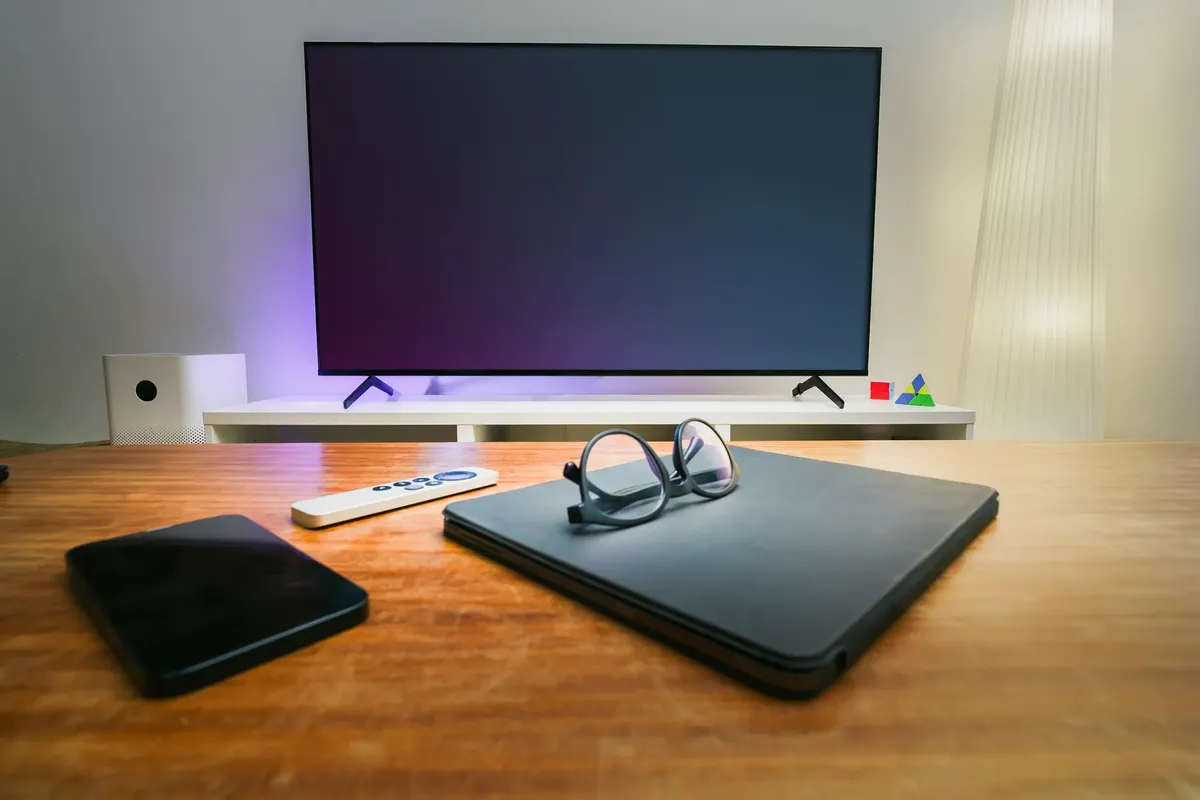
Should I use a structured planner or a flexible note-taker? I laid out two different tablets on my coffee table, one running a rigid calendar app and the other a free-form sketching tool. It was a visual representation of the eternal struggle between structure and freedom.
The choice between a structured planner and a flexible note-taker depends entirely on whether you are managing time or managing information. A planner is designed to tell you *when* to do something, whereas a note-taker is designed to help you understand *what* you are doing.
Using the wrong one for the wrong task leads to frustration.
| Feature | Structured Planner | Flexible Note-taker |
|---|---|---|
| Primary Goal | Time Management | Information Organization |
| Best For | Deadlines and Meetings | Research and Brainstorming |
| Complexity | Low to Medium | Medium to High |
| Mobility | High | Medium |
If your life is driven by appointments, the planner wins. If your life is driven by projects and deep thinking, the note-taker is your essential companion.
Building a sustainable habit with digital tools
I stood in line at a crowded coffee shop, watching people tap away at their screens with varying levels of intensity. Some looked organized and calm, while others looked stressed by the very devices meant to help them.
Sustainability in productivity comes from setting boundaries with your tools. If you spend more time tweaking your dashboard than doing work, you are experiencing "productive procrastination." The goal is to reach a state where the tool is invisible.
To build a sustainable habit, follow this routine: 1. Set a specific time each morning to review your tasks. 2. Perform a weekly "cleanup" to archive completed items and clear clutter. 3. Limit feature exploration to once a month to prevent constant distraction.
A successful implementation means you feel more capable, not more overwhelmed. If the app makes you feel guilty for not being "perfect," it is the wrong tool for you.
Limitations of digital productivity
A sudden loss of internet connectivity during a remote work session reminded me that all digital tools have a breaking point. Without a stable connection or a charged battery, even the most advanced app becomes useless.
The effectiveness of any productivity app is limited by the user's own discipline and the hardware's reliability. For instance, if an app requires a constant high-speed connection to sync, it fails in areas with poor connectivity.
Additionally, heavy apps can drain battery life, making them impractical for long days of travel.
The record names the year 2017.

When I tried the steps in order, the second one is where I paused longest.
This order does not hold, however, when the figure is not 4.3 billion.
- "The best tool is the one that disappears into your workflow."
- If you are looking for a way to reclaim your focus in a world of constant notifications, a high-quality productivity app is your first line of defense.
- I sat at my desk last Tuesday, staring at a colorful task list that felt more like a cluttered to-do list than a plan.
The later part of this article returns to WebOS history Palm to LG.
The same subject is also called Palm webOS technology transfer.
The same subject is also called LG Smart TV OS evolution.
The same subject is also called Mobile OS diversification history.
The same subject is also called WebOS platform evolution.
This part also covers Smart TV OS development.
This part also covers WebOS evolution from Palm to LG.
Related

Comments 0